
Cabinetry Design: Using Cabinetry to Carry Your Style Throughout the Home
Cabinetry is one of the few design elements our design team can repeat room to room without making a home feel “matchy.” When we plan cabinetry as a whole-home system—materials, door profiles, finishes, hardware, proportions, and detailing—we create continuity that reads as intentional, elevated, and calm. The goal is not identical cabinets everywhere; the goal is a recognizable design language that adapts to each space.
 Choose the Cabinet Door Style That Best Represents Your Look
Door style is the most visible cue to your home’s character. For a clean, architectural feel, we lean toward flat-panel slab doors or minimal Shaker profiles. For transitional warmth, a classic Shaker with a slightly wider stile and rail delivers timeless structure. For traditional refinement, raised-panel or detailed profiles add dimension and formality. When we commit to one primary profile and repeat it in key areas (kitchen, mudroom, built-ins), the home feels designed rather than assembled.
Decide on Inset vs. Overlay for Consistent Craftsmanship
The construction approach has a major impact on style. Inset cabinetry reads tailored and premium, aligning well with classic, coastal, and traditional interiors. Full overlay feels sleek and contemporary, with uninterrupted lines that suit modern and transitional homes. Either choice works across the home, but switching back and forth can fragment the visual story. A consistent approach anchors your style.
Set the Level of Detail for a Unified Design Language
Detail choices—beaded frames, applied molding, integrated finger pulls, edge profiles—define the “accent” of your cabinetry. Our designers select a detail level that matches the home: crisp and minimal for modern, restrained and edited for transitional, layered and decorative for traditional. Repeating the same level of detail across spaces is what makes cabinetry feel cohesive.
Choose the Cabinet Door Style That Best Represents Your Look
The galley kitchen is a practical layout often seen in smaller homes and apartments. It features two parallel countertops with a walkway in between, creating a streamlined work zone that is ideal for chefs who prefer an efficient kitchen workflow.
- Space-saving: Perfect for tight spaces.
- Efficient: The “kitchen triangle” (sink, stove, and fridge) is close together.
- Challenges: Limited space for multiple cooks and no room for a dining area.
Create Continuity With a Thoughtful Whole-Home Cabinet Finish Palette
A finish palette is the fastest way to carry style throughout the home. The most successful plans limit finishes to two or three core options and deploy them strategically. This keeps the home harmonious, allows for visual rhythm, and prevents one-off selections from competing.
Build a Three-Part Cabinetry Finish Plan
We plan finishes in three tiers: Primary (used most often), Secondary (used to support the primary), and Accent (used sparingly for high-impact moments). For example, a warm white primary finish can carry the kitchen perimeter, laundry, and bathroom vanities, while a natural oak secondary finish appears in a mudroom bench, built-in shelving, or a powder vanity. A deep accent—charcoal, navy, or walnut—can be reserved for a bar, a library wall, or an island.
Use Consistent Undertones to Avoid Color Drift
Continuity is not only about color names; it is about undertones. Whites can skew cool, creamy, or neutral; wood stains can lean amber, red, or taupe. We select finishes with matching undertones and confirm them under your home’s lighting conditions. When undertones align, cabinetry feels intentional across adjacent rooms and sightlines.
Repeat Materials Across Key Sightlines
Open floor plans and hall views amplify differences. Our designers identify common sightlines—kitchen-to-living, entry-to-stair, hallway-to-bath—and repeat materials within those views. A repeated wood tone, a consistent paint sheen, or matching hardware finishes in connected spaces can visually “stitch” the home together.
Use Cabinet Hardware as a Whole-Home Signature
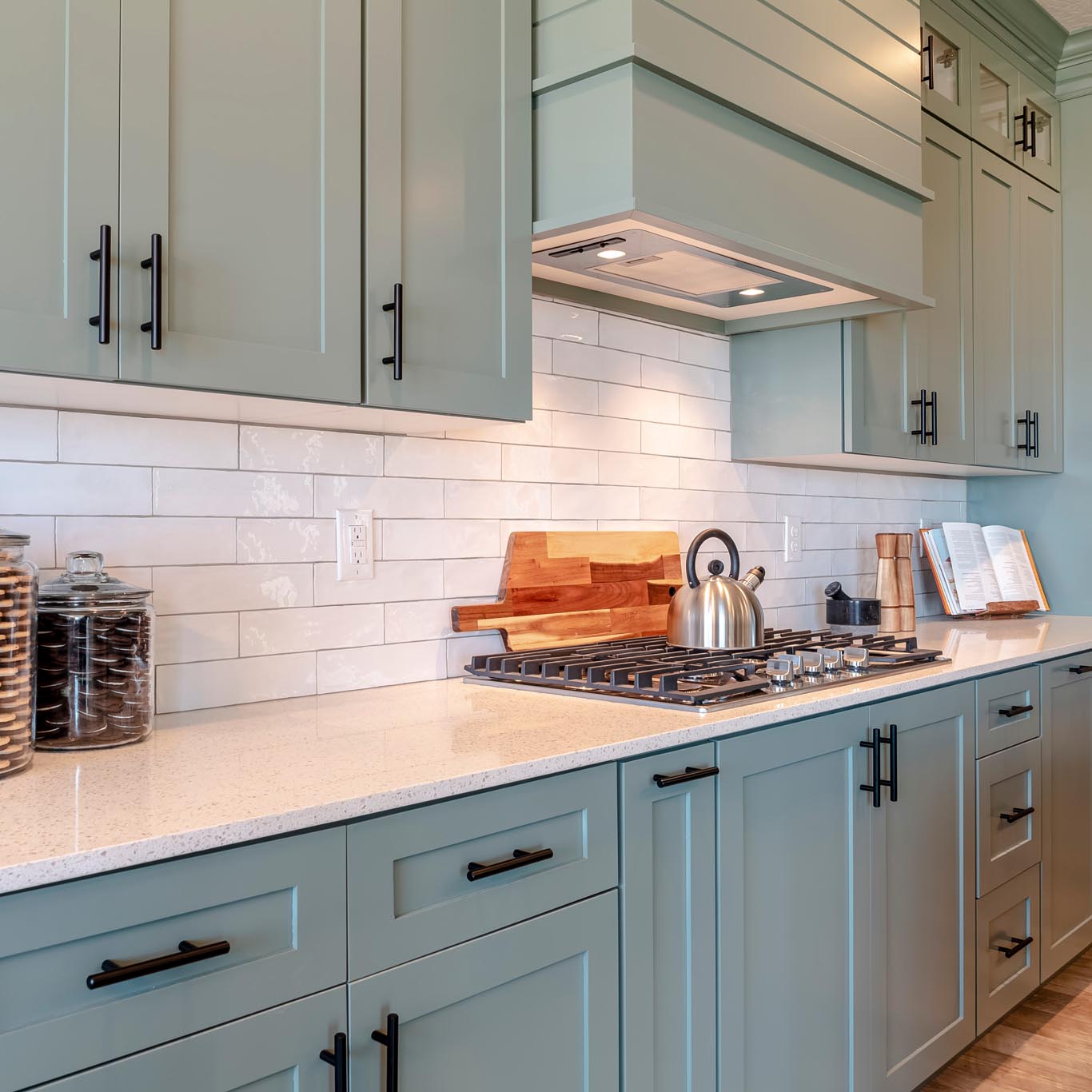
Hardware is a small detail that makes a major style statement. When we keep a consistent hardware family throughout the home, we create a deliberate thread that reads as curated and high-end.
Select a Hardware Family and Vary It Intentionally
We help you choose one core hardware finish—brushed brass, polished nickel, matte black, or bronze—and a consistent design language (arched pulls, linear bars, classic knobs). Then we vary thoughtfully: longer pulls for pantry doors, smaller knobs for upper cabinets, and specialty hardware for unique features like appliance panels or a bar. The finish stays consistent while the scale adapts to function.
Match Hardware to Cabinet Proportions, Not Trends
To keep cabinetry balanced, hardware length should relate to drawer width and door height. Oversized pulls can elevate large drawers and reduce visual clutter, while smaller knobs can preserve a classic look in tight spaces. When hardware fits the cabinetry, the entire home looks more refined.
Coordinate Hinges, Latches, and Accessories
Inset cabinetry often exposes hinges; glass-front doors may require special hinges; some built-ins use latches. We coordinate these “supporting” pieces with the primary finish. This attention to detail is one of the ways we make our whole-home cabinetry look custom.
Align Cabinet Proportions and Lines for a Custom, Cohesive Look
Cohesion is largely a matter of linework: repeated alignments, consistent reveals, and intentional proportions. When cabinet heights, panel lines, and trim treatments work together, you get that built-in, architectural quality.
Use Repeatable Dimensions Across Rooms
We standardize key dimensions where practical: toe-kick height, stile width, filler strategies, and crown or top trim depth. Even when cabinetry changes function (a vanity vs. a mudroom tower), repeatable dimensions create a consistent “handwriting.”
Plan Clean Transitions Between Cabinet Runs and Walls
Abrupt transitions can make cabinetry feel like furniture placed against a wall rather than part of the architecture. We use scribed fillers, end panels, and return details to create clean edges. In open areas, we panel the backs and sides of islands or peninsulas so every visible face matches the intended style.
Maintain Consistent Reveal Lines and Shadow Gaps
Reveal and shadow lines are subtle, yet they are a hallmark of high-end cabinetry. We maintain consistent gaps between doors and drawers, align drawer stacks, and repeat panel spacing on appliance panels. This makes cabinetry feel precise across the entire home.
Design Cabinetry by Zone While Keeping the Same Style Thread
Every room has different needs. Our designers keep style consistent while letting each zone express itself through layout, storage type, and selected accent moments.
Kitchen Cabinetry: Establish the Primary Style Anchor
The kitchen typically sets the standard for cabinetry in the home. We lead with our primary door style and finish, then use controlled variation: an accent island finish, a distinct hood surround, or glass-front uppers. For seamless style, we integrate appliances into panels where appropriate and carry the same detailing into adjacent spaces, such as a pantry or breakfast nook.
Living Room Built-Ins: Repeat the Door Style With Tailored Function
Built-ins become architectural when their trim aligns with baseboards, window casings, and ceiling lines. We repeat the kitchen door profile, then tailor the interior: adjustable shelves, concealed wiring chases, ventilation for electronics, and a mix of closed storage and display. The finish can match the kitchen for continuity or shift to the secondary finish for a layered look.
Entry and Mudroom Cabinetry: Durable Style That Works Hard
Mudroom cabinetry needs to be durable and thoughtfully organized, with tall lockers, bench storage, shoe drawers, and charging niches. We keep the same door style and hardware family while choosing finishes that tolerate wear—lower-sheen paints, robust lacquers, or durable stained wood. Paneling the bench front and side gables reinforces a custom look.
Bathroom Vanity Cabinetry: Coordinate Without Copying
Bathrooms are a perfect place to echo cabinetry style in a refined way. We keep the same door profile and hardware finish, then adjust scale: slimmer stiles for a light feel, furniture-style toe details for classic homes, or wall-mounted vanities for a modern look. Repeating the same wood tone or paint undertone across bathrooms is often enough to tie them together.
Laundry Room Cabinetry: Make Utility Look Intentional
A laundry room can carry the home’s style through consistent fronts, hardware, and trim. We add function-forward details—pull-out hampers, hanging rods, folding counters, and tall utility storage—while keeping the same cabinetry language. Even a compact laundry area feels elevated when the cabinetry matches the rest of the home.
Home Office Cabinetry: Built-In Style With Practical Storage
Office cabinetry benefits from repeatable elements: base cabinets with drawers, uppers or open shelves, and a concealed printer station. We match door style and hardware to the home, then customize the workspace with integrated lighting, file storage, and cable management. Using the secondary finish here can add warmth and make the space feel distinct yet connected.
Closet Cabinetry: Continue the Design Story Inside the Home
Closets are often overlooked, but cabinetry here adds daily function and style continuity. We repeat hardware finishes and match wood tones to the home’s millwork. Even when we use simplified door fronts, keeping consistent proportions and materials reinforces a complete, cohesive design.
Use Trim, Panels, and Molding to Carry Cabinetry Style Seamlessly
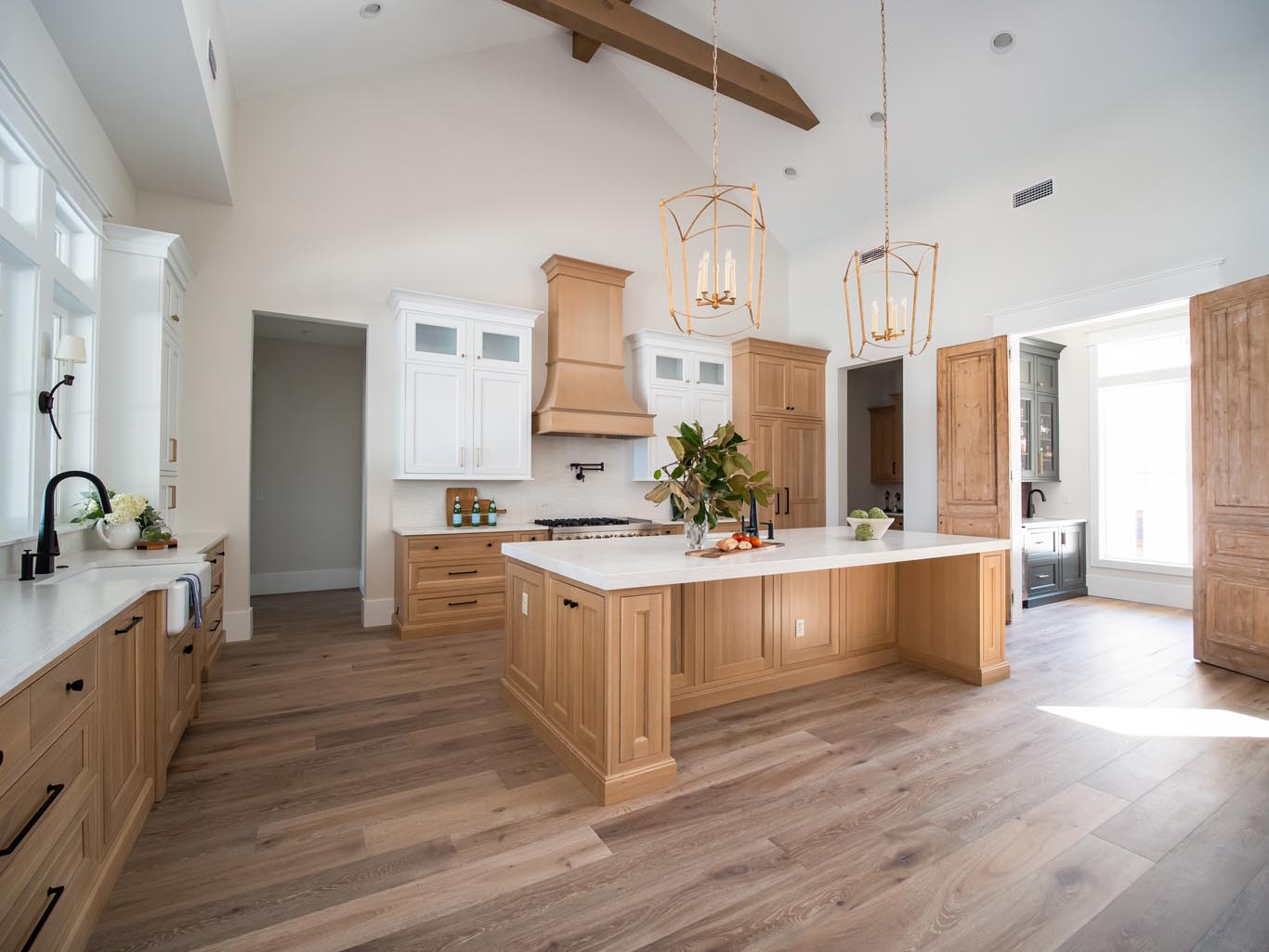
Trim strategy is what makes cabinetry feel built-in rather than added on. Our design team treats cabinetry as part of the architecture by coordinating its “edges” with the home’s millwork.
Coordinate Crown, Light Rails, and Base Details
In traditional and transitional homes, crown molding and light rails can be repeated across rooms for consistency. In modern homes, we may skip the crown entirely and use a clean ceiling reveal or a simple top panel instead. The key is repeatability: the same approach used thoughtfully across the home elevates the cabinetry system.
Use End Panels and Appliance Panels as Design Opportunities
End panels are prime real estate for style continuity. We can add applied molding, bead detail, or flush panels depending on the home’s aesthetic. Appliance panels should align with cabinet lines and match door style, preventing visual interruptions that break the whole-home story.
Extend Cabinet Materials Into Surrounding Features
For a cohesive look, we can extend cabinetry materials into nearby features: matching floating shelves, a wood-wrapped hood, a built-in bench, or a paneled wall section. These repeated materials act as design connectors across spaces.
Balance Repetition and Variation to Keep the Home Interesting
The most memorable cabinetry design is consistent yet layered. Our designers repeat core identifiers—door style, hardware finish, and undertone—then add variation through selective accents. This is how we maintain continuity without creating monotony.
Where to Repeat for Maximum Impact
We repeat the primary door style in the most visible spaces: kitchen, primary built-ins, mudroom, and main-level bath. We repeat hardware finish across the home where possible. We repeat the wood tone or paint undertone in at least two additional areas to reinforce the palette.
Where to Vary Without Breaking Cohesion
Variation works best in controlled, purposeful moments: a darker vanity in a powder room, a wood island in the kitchen, or a library wall in a moody finish. We keep the same door profile and hardware family, so the variation reads as a designed layer rather than a mismatch.
Use Open Shelving and Glass Strategically
Open shelves and glass doors can add air and dimension, but too much can fragment the look. We place them where they make sense: display zones, bar areas, or built-ins with intentional styling. Matching shelf thickness and finish to other cabinetry details keeps the look coherent.
Plan Cabinetry for Longevity and Daily Performance
Whole-home cabinetry is a long-term investment. When style and function are planned together, the home not only looks cohesive—it works better.
Prioritize Storage Systems That Fit Each Room’s Reality
Kitchens benefit from deep drawer stacks, pull-out trays, and dedicated pantry zones. Bathrooms benefit from drawer organizers, integrated outlets, and moisture-resistant interiors. Mudrooms benefit from tall cubbies, shoe storage, and durable surfaces. When the internal organization is tailored to each space while the exterior style remains consistent, the home feels both elevated and practical.
Choose Finish Durability by Room
We match finish performance to conditions. High-traffic zones benefit from more durable coatings and lower-maintenance surfaces. Wet zones demand moisture-resistant materials and careful edge sealing. A consistent palette does not mean identical materials everywhere; it means a consistent appearance with appropriate performance.
Use Lighting to Enhance Cabinetry Design
Lighting is part of cabinetry design. Under-cabinet lighting clarifies work zones and emphasizes clean lines. In-cabinet lighting elevates glass-front storage and bar areas. Toe-kick lighting adds a subtle, high-end glow in kitchens and halls. Keeping lighting temperature and fixture style consistent supports the whole-home look.
Common Cabinetry Design Mistakes That Break Whole-Home Style
- Too many door styles: Mixing slab, Shaker, and raised-panel fronts across rooms creates visual noise.
- Unrelated undertones: A cool gray-white kitchen and warm creamy vanities can clash even if both are “white.”
- Hardware inconsistency: Switching finishes and shapes from room to room dilutes the design identity.
- Unplanned transitions: Exposed cabinet sides, unfinished ends, and mismatched trim make cabinetry feel piecemeal.
- Ignoring sightlines: In open layouts, a single mismatched finish can dominate the view and disrupt cohesion.
A Practical Whole-Home Cabinetry Checklist
- Define one primary door style that represents our home’s design direction.
- Choose inset or overlay as a consistent construction approach.
- Set a finish palette with primary, secondary, and accent selections.
- Select a hardware family with a consistent finish and complementary shapes.
- Standardize key dimensions, such as toe-kick height, stile width, and trim depth, where possible.
- Plan sightlines and repeat materials across connected spaces.
- Tailor interiors by room for daily function while keeping exterior style consistent.
- Detail the transitions with panels, fillers, returns, and coordinated trim.
Cabinetry That Connects the Entire Home
When the Eikos Design crew treats cabinetry as a whole-home system, we create continuity that feels effortless: a consistent door profile, aligned undertones, repeatable proportions, and a hardware signature that quietly ties each room together. With a clear framework, cabinetry becomes the design element that carries our style through the home—visually cohesive, functionally precise, and unmistakably intentional.