
Cabinet Types: The Difference Between Stock, RTA, Semi-Custom, and Custom Cabinets
When planning a kitchen or bathroom remodel, selecting the right type of cabinetry is one of the most important decisions. Cabinets not only define the aesthetic appeal of your space but also determine functionality, storage, and long-term value. Below, we explore the four major types of cabinets—stock, RTA, semi-custom, and custom—in depth, helping you understand their unique features, benefits, and drawbacks so you can make the best choice for your home.
1. The Galley Kitchen Layout
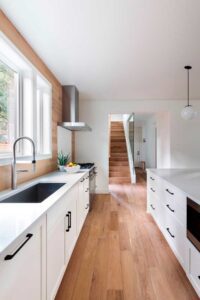
The galley kitchen is a practical layout often seen in smaller homes and apartments. It features two parallel countertops with a walkway in between, creating a streamlined work zone that is ideal for chefs who prefer an efficient kitchen workflow.
- Space-saving: Perfect for tight spaces.
- Efficient: The “kitchen triangle” (sink, stove, and fridge) is close together.
- Challenges: Limited space for multiple cooks and no room for a dining area.
Stock Cabinets: Affordable and Accessible
Stock cabinets are mass-produced, pre-manufactured units available in standard sizes and limited finishes. They are the most budget-friendly option and are ideal for homeowners seeking a quick, cost-effective solution.
- Materials: Often made from medium-density fiberboard (MDF), particleboard, or plywood with veneer finishes.
- Design Variety: Limited door styles, finishes, and hardware options.
- Size Range: Standard widths (usually in 3-inch increments) with restricted height and depth variations.
- Installation: Quick availability, typically delivered within days or weeks.
- Best For: Rental properties, budget-conscious projects, or simple renovations.
RTA Cabinets: Ready-to-Assemble Savings
Ready-to-Assemble (RTA) cabinets are shipped in flat packs and require assembly on-site. They combine affordability with more style options, making them popular among DIY enthusiasts and budget remodelers.
- Materials: Vary from particleboard and MDF to plywood and solid wood frames.
- Customization: More finish and hardware options than stock cabinets but still limited compared to semi-custom or custom lines.
- Assembly: Requires tools and time; quality of the final product depends heavily on assembly skills.
- Cost Savings: Lower shipping and manufacturing costs contribute to reduced pricing.
- Best For: DIY projects, secondary homes, or anyone looking to save on labor costs.

Semi-Custom Cabinets: Balance of Flexibility and Value
Semi-custom cabinets strike a balance between affordability and personalization. Built to order, they allow for more design flexibility than stock or RTA cabinets while remaining less expensive than full custom cabinetry.
- Materials: Typically solid wood frames with plywood or MDF panels; higher quality than most stock options.
- Design Options: Wide range of door styles, stains, paints, and finishes.
- Sizing: Offers modifications in depth, width, and height to better fit unique spaces.
- Lead Time: Usually takes 4–8 weeks for delivery since they are built after ordering.
- Best For: Homeowners seeking a custom look without the premium price.
Custom Cabinets: Unlimited Possibilities
Custom cabinets are designed and built to your exact specifications, offering unparalleled flexibility in materials, finishes, and layout. They represent the highest level of craftsmanship and personalization.
- Materials: Premium solid woods, high-quality plywood, or specialty materials.
- Design Freedom: Any size, shape, finish, or organizational feature can be created.
- Craftsmanship: Often handcrafted by skilled artisans or specialized cabinet shops.
- Lead Time: Extended—typically 8–16 weeks or more, depending on complexity.
- Cost: Most expensive option but offers the highest return on investment and unique results.
- Best For: High-end remodels, luxury homes, or projects requiring unique layouts and finishes.
Comparing Cabinet Types: Which is Right for You?
| Cabinet Type | Price Range | Customization | Materials | Lead Time | Best For |
|---|---|---|---|---|---|
| Stock | Low | Very Limited | MDF, Particleboard, Basic Plywood | 1–3 Weeks | Budget remodels, rentals |
| RTA | Low to Mid | Limited | MDF, Plywood, Some Solid Wood | 1–4 Weeks | DIY projects, cost savings |
| Semi-Custom | Mid to High | Moderate | Solid Wood Frames, Plywood, MDF | 4–8 Weeks | Balanced customization & value |
| Custom | High to Premium | Unlimited | Premium Solid Woods, Specialty Materials | 8–16+ Weeks | Luxury remodels, unique designs |
Key Factors to Consider Before Choosing Cabinets
When selecting between stock, RTA, semi-custom, and custom cabinetry, homeowners should carefully evaluate several factors:
- Budget: Determine how much of your remodel budget can be allocated to cabinetry, which often accounts for 30–40% of total kitchen costs.
- Timeline: Consider project deadlines and how long you can wait for delivery and installation.
- Style Preferences: Decide whether limited stock options meet your design goals or if customization is necessary.
- Durability: Assess the longevity of the materials and finishes, especially if this is your forever home.
- Resale Value: Higher-end cabinetry can increase your home’s resale potential and appeal to future buyers.
Final Thoughts
Choosing the right type of cabinetry requires balancing cost, design freedom, material quality, and timeline. Stock and RTA cabinets offer affordability and speed, while semi-custom and custom cabinets provide enhanced design possibilities and higher quality finishes. By carefully considering your needs, lifestyle, and long-term plans, you can invest in cabinetry that not only elevates your space but also adds lasting value to your home.
